Showing posts with label wildlife. Show all posts

July 02, 2008

Wachusett Wednesday

My regular day of field work at Wachusett was cut short by a thunderstorm today. Still, I had enough time to find some great specimens, and I even had company today even though nobody accompanied me to the field.


This pair clearly aren't fungi, but I spent a good deal of time near them. It's a mated pair of deer and they were very curious about me. They seemed to be following me for about an hour, though they never got too close. The female seemed to like it when I talked; she'd perk up her ears and sniff at the air and a couple of times began walking toward me. The deer never got closer than about ten feet, though. I wonder what they were thinking.
This is Amanita flavoconia; it could easily be confused with Amanita flavorubescens, which I found last week. That's probably just as well since both are likely toxic. Aside from some different microscopic features, though, the stipe of A. flavoconia doesn't change color when bruised as it does in A. flavorubescens. The volva of this mushroom is bright yellow and crumbles when handled.
This is also Amanita flavoconia, but an immature basidiocarp. The warty material on the caps of these specimens is the remnant of the universal veil; Amanita grows from a sort of egg, you see. The intensely yellow color of the universal veil remnants on A. flavoconia give it its colloquial name — "yellow patches."
Another Amanita, but quite different from the others. This is Amanita fulva and is a member of a section of the genus whose members are generally edible. Closely related to Amanita caesara, A. fulva is considered a delicacy in some quarters. Misidentification could prove fatal, though. I've tried several of the Amanitas from this group, though, and they are quite good. Most of the members of this section have orange or red tones, a slightly umbonate cap when young and no anulus (ring) on the stipe. The umbo is darker than the rest of the pileus, the margin of which is usually deeply striate. A. fulva has a vaginate volva, terminology that no doubt reflects what mycologists think about when they aren't trying to identify mushrooms. All it means is that the little cup at the base of this mushrooms stipe is membranous and formed like a sac but is narrow, fitting relatively tightly over the stipe. It's still more fun to have an excuse to say "vaginate volva," though.
This unassuming little wood decomposer is Crepidotus applanatum. It looks like a polypore from the top, but if you look closely at the photo you'll notice that it has gills. It is sometimes confused for the very tasty oyster mushroom, Pleurotus ostreatus. Unlike that choice edible, though, C. applanatum is not at all good tasting. It's toxic, but like many toxic things it tastes quite bitter. I doubt anyone would actually choke one of these down, no matter how convinced they'd previously been that it was an oyster mushroom. To avoid ruining dinner, you can always take a spore print. P. ostreatus has a gray to lilac print, whereas C. applanatum has light brown spores. If one examines the cuticle closely there's a definite difference in texture. C. applanatum's is minutely felt-like, whereas P. ostreatus is smooth.
I mentioned last week that there's good evidence that the genera Tylopilus and Leccinum aren't monophyletic and that new genera are likely to be created eventually. This mushroom is an example of the latter genus (for now). It was a difficult one to identify to species, even for our lab's Boletales expert. After a good deal of effort, though, it appears to be either Leccinum snellii or something extremely close to it.
Leccinum species are identified in part by the discoloration that results when the mushroom is cut. The flesh in some turns black, in others it turns brown, and in this one it turns deep pink except at the base, where it turns blue. Other discolorations occur when chemicals are applied. The flesh in the pileus turns blue in FeSO4 and brown-yellow gradually fading to a smoky color in KOH. The tubes bruise dark yellow-brown when bruised as well. You can always spend some time measuring spores, too. You can burn up a good hour or more trying to identify a Leccinum. I know I did. For most folks, though, it's a purely academic question. Almost all of them are good edibles and none are toxic. Some just don't taste good.
Teach the controversy! Some mycologists call this fungus Pluteus admirabilis; others call it Pluteus leoninus You see, P. admirabilis has a yellow stipe with a white base. The mushrooms in these photos clearly have a white stipe with a brown base, and that should make it P. leoninus. However, P. leoninus is solely European in geographic range, and this mushroom is growing in Massachusetts. So which is it? I'm erring on the side of conservative taxonomy and calling it Pluteus admirabilis until someone demonstrates a consistent molecular difference between the fungus with the white-stiped fruiting body and that with a yellow one. Maybe someone else will decide to call it P. admirabilis var. leucostipes and piss all the Pluteus specialists off. That will not be me. I'm jujst happy to see a Pluteus that isn't a boring shade of brown or gray.

You know, if mycologists can't agree on an important detail like this, how can anyone be sure that fungi exist? Those aren't mushrooms, they're god-hats!
In a matter of days, all of the purple tones will vanish from Trichaptum biforme and it will become a drab, grey to pallid, drab little thing like this. I guess it happens to the best of us. This is also a good example of convergent evolution. T. biforme looks quite a bit like Trametes versicolor, the common turkey-tail. In reality, they're about as closely related as you are to your dog... or even your pet bird. Similar environmental pressures over long periods of time have resulted in both fungi hitting on a similar solution in terms of the general shape of their fruiting bodies, but there are numerous less-obvious differences, too. The fungal kingdom is rife with examples of such convergences; the familiar cap-and-stem morphology of mushrooms has evolved independently at least six times and quite possibly more, for instance.

Sphere: Related Content

June 29, 2008

Macho Bio

Everybody knows that scientists are nerdy little dudes in long white coats, right?

Wrong.

Florida biologist saves drowning bear

Photo from Telegraph.co.ukThe 375lb beast had been roaming a residential area at Alligator Point, near Tallahassee, when wildlife officers decided to trap it and move it away from houses.

They shot the bear with a tranquiliser dart, spooking the animal, which raced toward the water. With the tranquilising dart taking longer than expected to have an affect on the animal, it managed to swim at least 25 yards before becoming drowsy.

That was when Adam Warwick, a biologist with the Florida Fish and Wildlife Conservation Commission, decided the bear may need rescuing and dived in...

Mr Warwick kept one arm underneath the bear gripped the scruff of the bear's neck with the other to keep its head above water as he dragged the animal back to shore...
Well that's pretty macho, but if I ever saw a 375 lb. Tenebrionid beetle, I wouldn't wait for someone to shoot it with a tranquilizer gun. I'd wrestle it to the ground while it was fully conscious.

As long as someone had pumped some tranquilizers into me first.

Sphere: Related Content

March 29, 2008

What is Killing the Bats of the American Northeast?

In yet another one of the apparent ecological catastrophes that are becoming more and more prevalent of late, a disease of some sort is causing massive die-offs among populations of several bat species in the northeastern US. The disease, labeled "white-nose syndrome," is symptomized by the proliferation of a Fusarium fungus around the animals' noses. Bats with the disease are waking up too early from hibernation, are emaciated, and are leaving their winter shelters in a desperate search for food. The end result is that they freeze to death. Nobody knows yet what actually causes this syndrome. Fusarium can be a pathogen, of course, but in this case it appears to be a secondary infection and a symptom rather than a cause. The Hartford Courant is reporting today that the disease, already known in Massachusetts, New York and Vermont, has now appeared in Connecticut as well.

The presence of the fungal infection may be a dead giveaway as to the mechanism that's causing the bats to become emaciated, though. I have a hypothesis that I admit is based in part on my ignorance of what specific investigations have already ruled out. As I don't know, though, I'll advance a possible cause. First, though, a little bit of today's Hartford Courant article.

Epidemic Strikes Bats
White-Nose Syndrome Spreads To Connecticut


A mysterious condition that is already decimating bat populations in New York, Massachusetts and Vermont has spread to Connecticut, with vast implications not only for bats but for the vital role they play in controlling mosquito populations.

Jenny Dickson, a wildlife biologist with the Connecticut Department of Environmental Protection who entered a major bat hibernaculum (or bat cave) in Litchfield County on Thursday, has confirmed the presence of the usually fatal "white-nose syndrome" on numerous hibernating bats.

The syndrome, first detected in New York state caves in the winter of 2006-07, is so named for the white fungus that coats the noses, legs and wings of afflicted bats. The condition generally causes death before the bats emerge from their winter hibernation. In New York state, more than 80 percent of the bats in affected caves have died over the past two winters...

"Bats are our single largest predator of night-flying insects and provide an important form of natural insect control. Any significant depletion in their numbers will also result in a significant effect in other parts of our ecosystem," she said...

The bat plague was first noticed about a year ago, when hikers and cave enthusiasts in New York state observed bats that were still supposed to be hibernating congregating near cave entrances. Some were even flying out in frigid daytime temperatures to die on the snow. Responding to these reports, wildlife biologists entered known bat caves — as many as 250,000 bats can hibernate in a single large cave — and began documenting the telltale white-nose fungus on the sleeping bats, many of whom also showed signs of emaciation.

An impromptu network of federal and state agencies, and teams of veterinary pathologists — from the University of Connecticut, Cornell and the University of Wisconsin — have been meeting all winter via teleconferences to share information and the results of necropsies of affected bats. But so far they have not been able to determine the cause of the syndrome. The scientists mostly agree, however, that the fungus found on the bodies of infected bats is probably a symptom and not a cause of the condition.

"We just don't know yet what the cause of [white-nose syndrome] is — whether a virus, a bacteria or a toxin," said Dr. Randall Nelson, Connecticut's public health veterinarian...

Experts also agree that the affected bats have extremely low fat levels in their bodies...

Dr. Richard A. French, a veterinary pathologist at UConn who has supervised the necropsies of bats with the fungus, points to another difficulty that is likely to delay a rapid solution to discovering the cause of the syndrome.

"We've never done a comprehensive study on hibernating bats, so we don't have a lot of norms to start with," said French.

"We have found on the bats we've examined so far, for instance, significant amounts of parasites. But we don't even know if that's normal or not. It's possible this could take years of study to understand..."
I don't know if investigators have already examined the gut bacterial flora in these bats, but from the little bit I've been reading about white-nose syndrome it would seem a crucial possibility that there may be a change there.

As readers may know, one of the things I've been researching myself is the role of chitinases in nature. In my research, I ran across a paper a few months back in which it was demonstrated that bats harbor several chitinase-producing bacteria in their intestines:
Whitaker JO, Dannelly HK and Prentice DA. 2004. Chitinase in Insectivorous Bats. Journal of Mammalogy 85:15–18. DOI: 10.1644/1545-1542(2004)085<0015:CIIB>2.0.CO;2
In the study, nine bat species were found to harbor a diversity of at least ten different chitinase-producing bacteria. It was also shown that as bats feed during the warm season, they build up residual insect chitin in their gut. During hibernation, the chitinase-producing bacteria proliferate and break the chitin down into carbohydrates. Mammals can't normally digest chitin; it requires the presence of symbionts that manufacture chitinase for them to use the normally indigestible material as a source of carbohydrates. Mammals do produce lysozymes, another group of enzymes that possess a binding domain much like the active sites in chitinases, but these are not nearly as efficient at slicing up chitin polymers. They just break them into chunks and are involved with preventing fungal infection by preventing cell wall coherency in a potential pathogen. If you're going to derive nutritional benefit from leftover chitin, you've got to have chitinases in your intestine. It's the same principle we see in symbioses such as that in the gut flora of termites; remove the lignase-producing microflora from termite guts and you wind up with termites that can no longer digest wood. They starve to death no matter how much they eat.

If insectivorous bats somehow lost their intestinal symbionts, a similar thing would happen. During their active season, the bats might be just fine because they don't rely on the digestion of chitin for nutrients. However, when they stopped actively feeding and went into hibernation, some other bacterium might proliferate in the gut. The chitin "store" that provides energy during the winter would no longer be accessible. The bats would starve in their sleep, essentially. That's exactly what is being observed in white-nose syndrome.

I find the presence of the Fusarium interesting in light of this. It may be that the bats' immune system is being compromised by lack of nutrition, but it could also be the case that the loss of the chitinase-producers means that the organisms that are responsible for keeping fungi from infecting the bats aren't around to digest the pathogen. Bacteria the dwell in the digestive tract could easily have a role in this. Chitin is chitin for the most part; the same organism that produces chitinase responsible for breaking down insect chitin is very likely to be producing chitinase that breaks down fungal chitin. It's very typical that a given organism that digests chitin produces multiple chitinases, each of which is a variant on the basic theme of family 18 glucosyl hydrolase.

As I've admitted, I don't have a clue as to what white-nose investigators have examined, and for all I know the loss or replacement of bacterial flora may have already been discarded as the cause of the bat die-off. If it hasn't been, however, I hope it will be. I doubt that we have the luxury of years in figuring out how to stop this die-off. Without bats to control insect populations, there could be serious human health consequences due to the proliferation of mosquitoes carrying diseases such as West Nile and Eastern Equine Encephalitis. Besides, bats are amazingly cool creatures and it would be a pity to lose them. I hate to think of the suffering; these are social, relatively intelligent animals. For that reason alone, investigators must find a way to stop this disease.

Sphere: Related Content

February 17, 2008

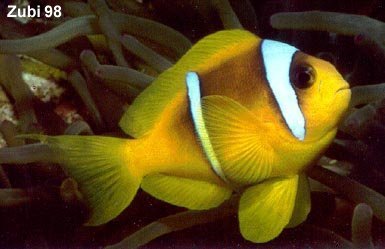
Reconstructing Nemo: An Elegant Paper on Clownfish Evolution

ResearchBlogging.orgWhy would a mycologist be blogging about a paper about clownfish? I'd be the first to admit that my knowledge of marine biology is practically nil. I'm not even particularly interested in fish phylogeny, truth be told. Nonetheless, this particular paper details such elegant research and is written so lucidly that I couldn't resist writing about it. This is great stuff and I think anyone with an interest in molecular biology, biogeography and phylogenetic reconstruction in general will appreciate it, even if you're like me and prefer your fish blackened with a nice herbal crust as a rule.

Authors Simona Santini and Giovanni Polacco conducted the most thorough investigation of the subfamily Amphiprioninae to date. This subfamily has been divided morphologically into two genera comprised of 28 species; the present study includes 23 of these species.

The investigators sequenced or obtained previous sequences from three regions of the mitochondrial genomes in their subject species. Two of these (cytochrome b and 16S rRNA) are relatively conserved coding regions and the third (the first half of the D-loop control region) is non-coding. As one would expect, coding regions are under significant selective pressure while non-coding regions are not, so including all three of these provides a high degree of signal resolution in terms of molecular phylogeny. The molecular phylogeny was then overlaid onto morphological and behavioral reconstructions as well as biogeographical data. The consensus tree resulting from these thorough data sets produce some surprises, not the least of which is that the overall reconstruction defies Mayr's rule-of-thumb that evolution is polarized in the direction of increased specialization beginning with generalist ancestors.

In fact, it appears more likely that clownfish (or more properly, anemonefish) evolved from a specialized ancestral species that dwelt in rock crevices in the Pacific Ocean, more specifically in an area between the Phillipines, Sumatra, the Great Barrier Reef and Melanesia. The evidence supports a morphology quite different than what we see today; the ancestral anemonefish seems to have been a shy, slender-bodied fish with a rounded tail. It is likely that this ancestor formed a symbiotic relationship with one or two anemones. Eventually, the fish dispersed and developed bold, territorial behavior that allowed the descendants to become generalists. In fact, the most generalist clownfish species also have the most derived character states overall. This is an exception to the general rule; we usually see things the other way around. The paper demonstrates that the subfamily forms a true clade and calls for a new taxonomy of Amphiprioninae. In light of the thoroughness of this work, that seems well-justified.

Santini and Polacco's paper is relatively easy to read. They give enough background information on nearly everything they do in their study to make it readily accessible to laymen. It's nice to see such thorough work so carefully explained; even a guy like me who spends most of his time looking at fungi quickly learned a few new things. Those who are trying to get a handle on how evolutionary reconstruction works and how molecular biology enters into the picture could certainly do a lot worse than using this paper as a jumping-off point.

The only critique I have of this excellent publication has to do with the graphics. The trees shown in figure 2, in particular, would be much easier to comprehend if they had been in color rather than various shades of gray. Since biogeography also plays a substantial role in the research, a map showing the current ranges of the anemonefish as they exist today and routes of dispersion from their origins — a historical biogeography — would have been quite helpful in more fully visualizing the conclusions arising from the work. Still, these are minor points in comparison to the outstanding work that's been done here.

Finally, because I don't know much about fish, I'm left wondering about the use of certain morphological traits in constructing some of the phylogenetic trees. For example, things like body depth and caudal fin shape are clearly not discrete character states; they'd be analogous to height and limb length in humans, for example. I would also think that they'd be strongly influenced by environmental effects. I can't really tell from the paper how the authors compensated for these potential shortcomings in reconstructing the phylogenies based upon them.

Two other characters — number of hosts and dependence upon hosts for sheltering — seem to me to rely heavily upon a thorough knowledge of the behavior of the species under examination. The authors mention, however, that several of the species examined have not been well-studied previously. Whether these traits are among those which have been well-documented or whether some other means by which to base a reconstruction upon them was hit upon I can't say. Perhaps someone more knowledgeable about these fish can fill me in on what's known about the behavior of species like Amphiprion latezonatus and A. mccullochi.

Reference: SANTINI, S., POLACCO, G. (2006). Finding Nemo: Molecular phylogeny and evolution of the unusual life style of anemonefish. Gene, 385, 19-27. DOI: 10.1016/j.gene.2006.03.028

Sphere: Related Content

February 13, 2008

Food Should Taste Good. This Food Tastes Bad.

Nauseatingly bad tortilla chipsLL and I went food shopping last night and decided we wanted to try a different, healthy snack of some sort. We've been seeing these on the shelf for awhile but hadn't bought them before. We finally decided to give the chocolate tortilla chips made by Food Should Taste Good a try. We've had their other chips and liked them.

These crisps, however, are horrible. You know that face one makes when something tastes so bad that it literally sends a chill down one's throat, that "what the hell did I just eat" grimace? LL and I both had that reaction to this alleged snack. The taste is a combination of unsweetened chocolate and corn. They're nauseatingly bitter. We both agreed that they're one of the worst-tasting things each of us has ever tried.

The entire bag minus the three chips we managed to consume are destined to become crow food. There's a huge murder of crows that hangs around our neighborhood and LL has taken to feeding them on the back porch. They sit out there and wait for her every morning and don't even fly away when she opens the door at this point. I'm betting that they won't eat these chips, though. If I were a crow, I'd likely prefer some roadkill to these things. Heck, I'm human and I'd rather eat roadkill than subject myself to them.

Who are these things supposed to appeal to? I guess there must be a niche market somewhere consisting of people who like tremendously bitter corn-based products.

Sphere: Related Content

November 10, 2007

Religious Snake-Handler's Family Sues Hospital in Snake Bite Death

While we're on the subject of snakes, how about this tidbit of stupid from the state that brought us the Creationist museum, Kentucky?

Snakebite victim's family sues
BLAMES HOSPITAL, NURSE AND DOCTOR


As a woman bitten by a rattlesnake during a church service in London struggled to breathe, hospital employees made derogatory comments about her religious beliefs rather than providing proper care, contributing to her death, a lawsuit charges.

The case arises from the Nov. 5, 2006, death of Linda F. Long, 48, a London homemaker. Police said at the time that Long was handling a yellow timber rattler during a service at East London Holiness Church when the snake bit her on the right cheek...

According to the lawsuit, on the way to Marymount, someone in the vehicle called 911 at 7:46 p.m.; a dispatcher connected the call to the hospital, and the driver asked for an air ambulance to fly Long to Lexington. Hospital employees assured the Long family a helicopter was available.

A nurse met Long and those with her in the parking area outside the emergency room. Rather than take Long in right away, the nurse engaged Long and her family "in a lengthy and time-consuming series of questions" that went far beyond getting information needed to treat the snakebite, the lawsuit states.

After being taken into the hospital at 8:09 p.m., Long said she was having trouble breathing, and asked for oxygen. Hospital employees gave her a portable, oscillating fan as they allegedly "snickered and made derogatory comments" to employees -- and Long's family -- about the religious beliefs and circumstances under which she was bitten.
I'm going to stop right there. The 911 call on behalf of this religious nitwit was made at 7:46. She was at the hospital by 8:09 (that's 23 minutes) and by 8:28 she was being airlifted by helicopter to a treatment center. That's 42 minutes, which hardly sounds slow to me. I don't buy the story that medical workers laughed at her when she asked for oxygen; that sounds like embellishment, though of course I don't know. Then again, this is a pretty stupid way to die and certainly worthy of a Darwin Award.
The defendants named in the lawsuit are the hospital; Faith Howard, the registered nurse who allegedly met Long outside the emergency room; and Dr. Edward Wilson, who was on duty in the emergency room...
This family is suing the hospital and the doctors who attempted to treat their pea-brained daughter. Note that they're not suing the church that handed their daughter poisonous snakes and had her convinced that an invisible sky-daddy was going to stop them from biting her on the face. It wasn't snakes or medical negligence that killed this woman, it was her own lack of basic common sense and her credulity placed in a tremendously moronic religious practice. So if these people want to sue somebody, maybe it ought to be this god character. He apparently failed to hold up his end of the bargain.
The complaint also says the unprofessional comments about Long's religious beliefs were discriminatory and caused her and her family emotional pain and humiliation...
More emotional pain and humiliation than raising a daughter who willingly picked up poisonous snakes and set herself up to be bitten on the face? Awww, the poor snake-handling idiot whose own brain-dead behavior got her killed. Please, please, please tell me she never reproduced. Her family should be embarrassed by their daughter's religious beliefs.
Handling snakes in a religious service is a misdemeanor in Kentucky, but police rarely pursue charges because the practice involves a matter of religious freedom and believers are willing participants...
In other words, the state attempted to enforce common sense on these numbskulls and they cry about freedom of religion. Fine. Good. Get bitten by poisonous snakes. But when you do, you have no right to force a medical institution to defend itself because of something you did to yourself and you have no right to dignified treatment by anyone with an IQ larger than their shoe size. Everyone else on the planet is telling you that you shouldn't handle poisonous snakes, you insist that invisible spirits are going to protect you — against all empirical knowledge and common sense — and then you demand that everybody else respects your beliefs when you get killed by them? Hey, guess what... there's no more reason to respect your belief than there is to respect the beliefs of a drunk driver who insists that he can drive well after downing a six pack. There is no difference between snake-handling religious fanatics and drunk drivers in terms of the validity and valuable of their beliefs. We are all responsible for making sure that your self-destructive faith-induced imbecility is never given any respect.
The county attorney in Bell County filed a complaint against a snake-handling preacher in 1995 after a woman was bitten at a Middlesboro church and died, but a judge refused to issue a summons for the preacher.
See what you get for giving any respect to snake-handling bible-thumpers? That preacher is probably still out there passing around venomous reptiles, even after the death he's already facilitated. He shouldn't be respected; he should be serving a long, long prison sentence.
Snake-handlers believe the practice shows faith and God's power. The text for the belief is Mark 16:17-18: "And these signs will accompany those who believe: In my name they will drive out demons; they will speak in new tongues; they will pick up snakes with their hands; and when they drink deadly poison, it will not hurt them at all; they will place their hands on sick people, and they will get well."
Hey, guess what! Mark 16:17-18 is a load of bullshit. Just ask the last snake-handling pinhead to get bitten in Kentucky. Oh, you can't... because she's dead. Gee, didn't all her co-worshipers gather around and place their hands on her and make her well? I guess that part is a load of crap, too.
I can only wish the best to all of those who find themselves on the receiving end of one of the dumbest lawsuits of which I've ever heard. Ultimately, the only person responsible for the death of Linda F. Long is Linda F. Long. It was her choice to believe in this stinking pile of religiously-inspired nonsense, it was her decision to handle a timber rattler with her bare hands, and it was her own doing that she's now deceased.

Behold yet another victim of ignorance. But hey, maybe if her fellow fundamentalist whack-jobs close their eyes really tightly and pray really, really hard, they can bring her back from the dead. Or maybe they can all shove rattlesnakes down their trousers and dance a jig. Personally, I'm just fine with either choice. As Long would be able to testify if she hadn't let a rattlesnake chew on her face, faith will work equally well in either attempt.

Sphere: Related Content

September 28, 2007

Parrots and Raccoons

LL and I watched The Wild Parrots of Telegraph Hill this evening. It's one of those movies I've been meaning to see for a long time and just haven't gotten around to it until now. It's a very warm-hearted movie and it was fun to see some very familiar places in San Francisco again. It seems like ages since I lived there, even though it's only been about six years now. I never saw the parrots myself, though, although I'm pretty sure I did cross paths with Mark Bittner a couple of times in a coffee shop.

Still, that's not the main thing that the movie brought to mind for me. Seeing Bittner with the parrots made me think about the raccoons I became friendly with in Tallahassee over the course of nearly three years. I miss having them around and interacting with them a great deal.

We're just coming up on four months since we arrived here in Worcester, which is strange considering how easily this place has become home. In many ways, it feels like I've been living here for a long time, particularly now that I have a routine and a place for hunting mushrooms. I don't even get lost much anymore.

I do miss the raccoons, though. I know that most people think of them as vermin, as problems, and as potential rabies carriers and the like. To LL and I, though, they became very much a part of our lives. Every so often, we still talk about them, particularly when we throw away table scraps. We never did that when we were living at Hobbiton; we'd always put them out for the raccoons. We bought cookies for them and hung out with them practically every night. We saw a couple of generations of cubs grow up and established a good deal of mutual trust with them. Seeing the film brought that back to mind; the relationship we had with those animals wasn't terribly different from the one portrayed between Bittner and the parrots in the film.

We don't have anything like that here. Circumstances are very different now. There's something unique about the experience of becoming friendly with wild animals, though, especially when it's the result of a long process. Maybe we'll live someday in a place where we can form such a relationship again.

I haven't slept in almost twenty-four hours now, so perhaps I'm feeling more emotional about it than I usually would. I hope the pack of monsters is doing alright, though. I hope that nobody moved into the house we lived in in Tallahassee; the place was literally falling apart by the time we left. The landlord almost never made repairs, resulting in faulty wiring (always fun in a wooden house) and a hole in the bathroom ceiling and generally dangerous conditions. If any poor slobs did move into the place, though, I hope they were kind to the raccoons that would show up a half-dozen strong, sometimes more, on their deck and stare through the sliding glass doors. At best, I hope the new occupants got the message and became friendly with the animals, too. It's a worthwhile thing to do so. At the very least, though, I hope that the new residents weren't a cruel lot who did the raccoons harm.

I don't suppose I'll ever know. Raccoons are notoriously bad about keeping in touch.

Sphere: Related Content

August 07, 2007

Bad, Bad Fungus

When I write here about fungi, I typically talk about their good side. Some are very beautiful and the majority of them are necessary to preserving maintaining the health of ecosystems by acting as agents of decay, delignifying wood. We're finding new applications for them all the time in areas as diverse as medicine and nanotechnology. Still, there's a dark side to them as well. When we talk about fungi, after all, we're talking about a taxonomic kingdom as large and diverse as animals and plants.

One of the worst challenges the world faces from fungi right now is from a microscopic fungus with the mouth-filling moniker Batrachochytrium dendrobatidis. This nasty fungal bug is a pathogen that affects frogs; nobody is quite sure yet how it works, but it's theorized that it blocks the ability of the amphibians to absorb water through the skin. Amphibians don't drink water like most dedicated land animals, so if this is indeed the case then infected frogs die of dehydration even while surrounded by water.

Until very recently, it was thought that B. dendrobatidis reproduced amost exclusively asexually in nature. Spores produced by asexual reproduction are relatively thin-walled, and that was a little bit of good news in terms of how it spread. Thin-walled spores become dessicated quickly after leaving water, and that in turn meant that we could expect the rate at which the chytrid to spread would be limited by the distance between bodies of water that provide favorable conditions for germination. If it took too long for the spores to be transported from pond to pond, the spores would die before they had the chance to grow and the fungus wouldn't be spread efficiently.

Unfortunately, it looks like that estimation was incorrect. Based upon new genetic analysis in a study to be published next week in the Proceedings of the National Academy of Sciences, it now appears that sexual reproduction occurs frequently in B. dendrobatidis, and that's very bad news indeed. As is the case in many of the more-familiar macrofungi, sexual reproduction in this chytrid produces resting spores. Resting spores have thick, dehydration-resistant walls and can survive for decades (in some cases even centuries) in conditions unfavorable for germination. This means that the chytrid in question can spread over almost unlimited distances. For example, a person could pick up spores on their shoes from the mud near an infested pond. The mud could then dry out and fall off leaving just a few spores clinging to his boot. Weeks or even months later, this hypothetical human could visit a chytrid-free pond and deposit the resting spores. The pond is now infected, and within a year or two the frogs start dying. A wading bird could function in the exact same capacity and, since birds can migrate thousands of miles, spread sexually-engendered spores from North America to Asia along a migratory route.

Of course, there's an even worse scenario. In cases where the chytrids inhabit an ephemeral body of water, wind could act as the dispersal agent. When such a body of water dried out, spore-bearing dust can be picked up by a breeze and swept high into the atmosphere, remaining there sometimes for years at a time before being deposited in a new location and traveling around the whole planet in the meantime. If that's going on, we may well be looking at the extinction of frogs. The other factor here is sexual recombination; frogs may be resistant to the local strain of the fungus, but if new strains are introduced and interbreed with them, fungus that overcomes this natural resistance has a competitive advantage and the frogs are done for. The study referenced above makes this is a strong possibility. If that's the case, I'm not sure what can be done about the situation. Because both frogs and fungus are eukaryotes, we can't just go dumping fungal antibiotics into the habitat. This would be likely to kill not only the chytrids but also harm the frogs themselves and would almost certainly wipe out beneficial and necessary fungi. If you've ever had a case of athlete's foot, you already know how tough fungi are. To top it all off, it's likely that the introduction of various chemical pollutants into the frogs' habitat is already diminishing their immune response, so even those frogs that have evolved natural resistance to B. dendrobatidis infection are more likely to contract the disease and provide a rookery for more virulent strains.

Long story short, sexually-reproducing pathogenic chytridia means curtains for our croaking friends. That's an important trophic link to lose; everything from snakes to birds depends on frogs for a high-protein snack, and frogs are themselves important in controlling insect populations. Their loss would mean big changes in your local woodlands. At the current rate of spread, it probably won't take more than a couple of decades before you start noticing the difference.

Now, to be entirely "fair and balanced," I want to include a creationist take on all of this. Since they know that neither frog nor fungus evolves, the alternative theory can be summed up very simply in phraseology fit for any bumper sticker upon which rides a Jesus-fish:

I'll leave it to a theologian to explain why Jehovah/Allah/Flying Spaghetti Monster would decide to spend His time tinkering with frog-slaying microfungi.

Sphere: Related Content

July 24, 2007

Yesterday's Foray Finds

I was a bit too tired to bother writing all this table code last night (Blogger needs a better way to do simple tables!), so I'm just getting to it this morning. Here are photos from yesterday's outing at Silver Lake State Park (Hollis, New Hampshire). Nothing amazingly amazing, but new to me as a new arrival in New England (tomorrow marks three weeks since we got here).


A blue-staining fungus of some sort; it may or may not be a pathogen. Like most fungi, it's hard to identify without fruiting bodies or microscopic or genetic examination.
The golden chanterelle, Cantharellus cibarius, a choice edible. I found only three of them or else I'd certainly have brought home a sack-full, as it's one of my favorites.
Clavulinopsis fusiformis, golden fairy fingers. This specimen is a little past its prime, but the color is still remarkable.
Artist's conk, Ganoderma applanatum. The fruiting bodies produced by this fungus is extremely durable, sometimes lasting a century and so serving as a home for numerous generations of associated beetles. In this case, a couple of forked fungus beetles are visible (close-ups below). Like many larger polypores, this one gets rid of excess water by secreting drops of fluid around the growing edge. The color of this fluid can itself be useful in attempting to identify the fungus.
You know you're a bit obsessive when you feel compelled to identify an Inocybe down to the species; I think this one is I. agglutinata. I wouldn't testify to that under oath, but I can't imagine why I'd ever have to. The Inocybes are important mycorrhizal fungi but among the most difficult to identify. Precise taxonomy of the genus awaits clarification.
A member of genus Merulius, which is just a polite way of saying "dry rot." This one is growing in the woods, and you should be thankful for that. This fungus causes many millions of dollars to homes and other structures the world over every year.
Birch polypore, Piptoporus betulina, is among the most common polypores in New England. Reputed to be edible, it was the first wild fungus I ever tried to eat, way back in 1987. I carefully followed cooking directions from a book, only to find that the fungus tastes just like bitter ashes. Yummy.
Deer mushroom, Pluteus cervinus, is a decent edible if you can find one that hasn't been overrun with fungus gnat larvae. It's relatively easy to identify once you get the hang of it; the distinctly light pink gills that do not touch the stipe and growth on wood (never on the ground!) are good indicators. Not taht I'm advocating that you eat them until you've gotten some help identifying a few. Everyone's gotta start somewhere.
There's not too much to say about the elegant polypore, Polyporus elegans, other than it has very tiny spore tubes that make its underside look completely smooth. The stipe is black at its point of attachment to the substrate, too. Other than that, most people wouldn't even notice this organism.
The coral fungi, on the other hand, tend to be a bit more spectacular. They can get quite large and ornate, and some species come in shades of brilliant red, yellow and purple. On the other hand, this specimen of Ramaria stricta is a bit on the pallid side. Nonetheless, the branching is quite beautiful. While not toxic in the "you have three days to live" sense, almost all of the Ramaria spp. taste very bitter and will cause a badly upset stomach if one manages to actually choke it down.
Once upon a time, Indian pipe (Monotropa uniflora) was thought to be a fungus, but it's really a parasitic plant that's given up producing its own chlorophyll in favor of sucking the nutrients from the roots of trees. Always attracted to the unusual, I like this delicate, ghostly organism and certainly had plenty to look at at Silver Lake. They were everywhere.
It's nice to find familiar things in a new place, and I've grown very familiar with forked fungus beetles (Bolithotherus cornutus). These were living in the artists' conk pictured above.
Another insect with which I became acquainted in Florida is the banded netwing, Calopteron reticulatum, a distant cousin of the firefly. I saw scores of them yesterday, many of them on the leaves of horse chestnut trees. These two are working on ensuring the continuation of their species and paying no attention at all to the photographer. Bug porn!

Sphere: Related Content

June 27, 2007

First Baby Raccoons of the Season, and Probably Our Last

At 6:45 this morning, LL and I saw the first of this year's baby raccoons. It was Little Mama who brought them by. She has three magnificently cute cubs. They didn't come up on the deck and so I didn't get pictures of them; they instead huddled in a pile at the base of the hickory tree about fifteen feet away. They did eventually approach the deck but couldn't figure out how to climb up, so they instead called their mother back. The call of baby raccoons is hard to describe; it's a sort of cooing noise combined with the sound of a sad puppy. Little Mama responded instantly, and LL and I watched as the lot of them trundled back into the brush.

There are few things in the world cuter than baby raccoons, I have decided. Think kittens with bushy, ringed tails and wearing black bandit masks with fur that looks like its charged with static electricity and you've got the general idea.

I'm glad that we got to see them, though it prompted a comment shared by LL and I about how sad we are that we won't get to watch them grow up as we have the cubs of the last two seasons. We leave here in just five more days, today included. Despite their being wild animals — a fact that we do keep in mind in our daily interactions with the beasts — the raccoons have become like extended family. Some of them have learned a few words, including "cookie." We've watched two generations grow up and while we don't come in physical contact with them (one should not pet wild animals for any number of reasons), we've spent a good deal of time interacting in every other way. It's sad to think that after Saturday, these many wild creatures with whom we have established mutual trust will no longer be part of our lives.

Sphere: Related Content

June 25, 2007

'Coon Cam


What a face!


Littlefluff was the runt of her litter last year. She's about half the size of the other raccoons her age. She's also incredibly hyperactive and loves to play with her food.

Sphere: Related Content

June 13, 2007

Another Great Mystery Solved

We've all wondered how a raccoon would eat a hardboiled egg. It's been one of the burning questions plaguing mankind since the dawn of time.

I am happy to report that this is a puzzle no longer. Recent research, conducted about 10 minutes ago, reveals the mysterious and sublime process.

The raccoon first turns the egg upright and holds it around the middle. It then bites the little end off the egg and shoves its claws inside, just under the shell, thereafter pulling the egg apart lengthwise. Its then a simple matter to hunch down, use one paw to hold onto the shell, and scrape the good parts out with its teeth.

Having watched raccoons eagerly devour chicken bones on a number of occasions, I would have thought they'd eat the shell, too. Apparently not; this subject, at least, was quite nimble and hardly ate any of it but got nearly all of the egg white.

I wonder if I can publish this.

Sphere: Related Content

June 08, 2007

Of Human Stink in Floridian Heat and Its Effect on Baby Armadillos

The whole world seems terribly concerned with the fate of Paris Hilton today. I am not.

Instead, I spent almost the entire day, starting at 8:00 this morning, writing brief descriptions of books for a prospective buyer. It looks like another $1000 order, which is good news, of course. So engrossed in doing this was I that I hadn't even taken a shower yet when I heard rustling outside the house. Sure enough, the quartet of baby armadillos was back, snuffling their way through the brush and hoovering up ants and termites and such. I decided to go and have my third close encounter with the little critters.

For the first time today, they wanted nothing to do with me. As soon as I started approaching, they ran back to their warren and won't come out again. The only difference between today and my previous two encounters was that I haven't showered today. Perhaps 94° heat and the accumulated scent of humanity combined to send a strong enough warning to the armadillos for the first time today. Humans are, after all, dangerous, and I suspect that an unwashed human is more likely to eat an armadillo than a hygienic one in this part of the world. Thousands of years of evolution may well have resulted in natural selection for armadillos who fear stinky humans.

It only makes sense. Believe me, here in North Florida, you do not want to get stuck on a bus on a June day next to someone who has been waiting at the stop for twenty minutes and didn't take a shower. I'd run, too.

LL will be home soon. Maybe I'd better go do that, eh?

Sphere: Related Content

June 03, 2007

Life: Just Add Water

After weeks of near-silence, the woods are again filled with the calls of tree frogs tonight. I can distinctly make out green and pine woods frog calls. After a long absence of rain (we're still about 14.5" below normal for the year), we've had two days with at least a little bit, and a good soaking this afternoon. On a normal evening at this time of year, the volume of the frogs is so great here that one's ears hurt after a few minutes. Lately, there had been cricket calls, but otherwise dead quiet. Even tonight it's not nearly as loud as usual. Nonetheless, they're coming back. I wonder where they've been.

Life always finds a way.

Sphere: Related Content

Baby Armadillos

Click thumbnails for larger images

These four little critters are living in the woods behind my house. Today was my second encounter with them, and this time LL got to see them, too, though she's too busy working on a grant proposal to have a romp with them. They're quite a friendly bunch.

Here in the American Southeast, it seems that most people think of armadillos as either lawn pests or road kill. That's too bad; I find them to be among the most endearing of the local wildlife. In fact, I've found them to be far more amicable than most of the people I've met. I've yet to see an armadillo slap a Confederate flag on its ass, for instance, and then be unable to fathom why anyone should be offended by it. I'll miss these animals a great deal more than I'll miss the local culture when I move away from here.

Sphere: Related Content